
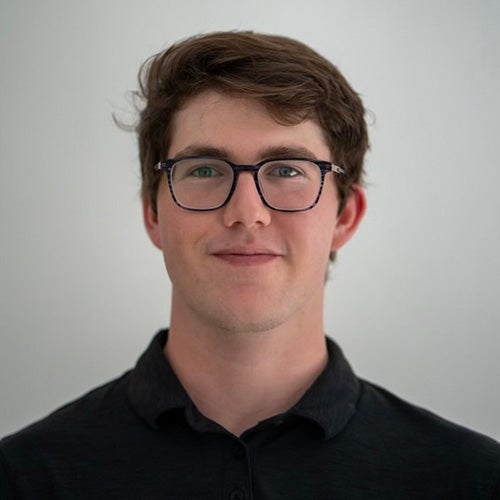
Q: What initially drew you to study economics at Rice?
A: Although I applied to the major with only a general sense of direction, Rice’s broad and practical definition of economics kept me in the major. Beyond the textbook idea of “allocating scarce resources,” I wanted to understand how customers and firms interact to create and capture value. As a learner, I was drawn to the exceptions to simplified models, where rational behavior falls short. Almost every lecture also came with a section on the limited extent of its applications, so Rice gave me room and resources to explore those edge cases thoroughly.
Q: What do you remember most about your experience in the economics program?
A: Independent Research (ECON 399), building on the coursework in Market Design (ECON 470), changed how I approach problems. In most coursework, assignments have predetermined answers to be completed in a week or so before the next lecture. Research challenged that assumption. For questions without a clear solution, I had to identify intermediate results and proofs, then move forward without knowing exactly where the work would lead.
Q: What skills or ways of thinking did you develop through studying economics that you still use in your career today?
A: Economics taught me to turn broad questions into testable ones. In consulting work, project definition starts broad and scopes change as business needs become clearer, sometimes weeks into a project. In project management and model building, I learned to make assumptions explicit, think through market behavior, and use data tactically rather than simply including as many figures as possible. The technical methods are useful, but so is back-up coverage where a modeled view falls short.
Q: Was there something you learned at Rice Economics that set you apart and gave you a distinct “edge” in the workforce?
A: My edge came from treating economics and cognitive sciences not as two separate majors, but as an opportunity to build my own version of a “behavioral economics and decision science” degree in the space between them. I combined courses across both fields with a summer semester in Madrid and a research trip across Cuba, bringing a global perspective to the concepts I was learning in textbooks. That combination of interdisciplinary study and international experience continues to set Rice apart.
Q: What do you think an economics education gives students that they might not get elsewhere?
A: At a research-focused institution like Rice, technical depth is a differentiator that economics capitalizes on. Statistics and econometrics classes in the degree gave me familiarity with data science methods I could put to work from the first day on the job. Experiences like the Consulting Practicum explored where I wanted to apply those skills without as much commitment as an internship or full-time offer. That balance between technical depth and flexibility is what I find particularly valuable.
Q: What unique opportunities did you take advantage of as a Rice economics student in the School of Social Sciences?
A: Rice's flexibility enabled me to shape the major around my interests. As I studied economics alongside cognitive sciences, I looked for classes at the intersection of the two, regardless of the listed department. I also pursued independent and supervised research and took logic and reasoning coursework under the Psychology department that counted toward my upper-level economics requirements. Those opportunities let me connect ideas across fields and make the degree my own. Outside of class, proximity to Kraft and time spent in the upper-floor study spaces helped make campus feel more like home.
Q: If you could go back and give your Rice self one piece of advice about preparing for a career, what would it be?
A: When thinking about the career path you want, it’s natural to picture yourself in a senior position, but it’s more useful to learn how people reach that point. I’d have coffee chats with professionals and look through LinkedIn profiles to understand their early roles and career pivots. Seeing how many careers take nonlinear paths would have taken some of the pressure off finding the “perfect” first job.